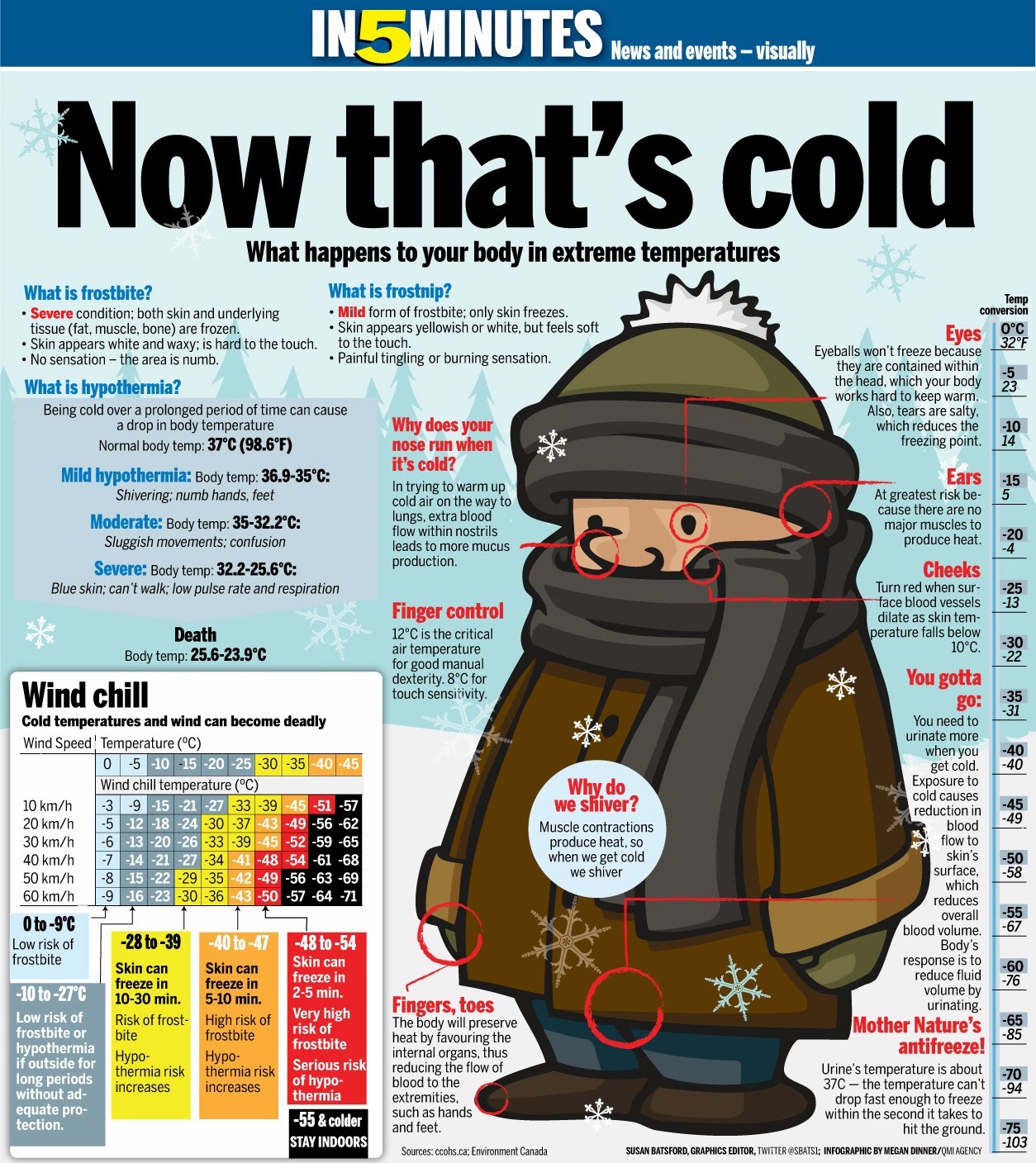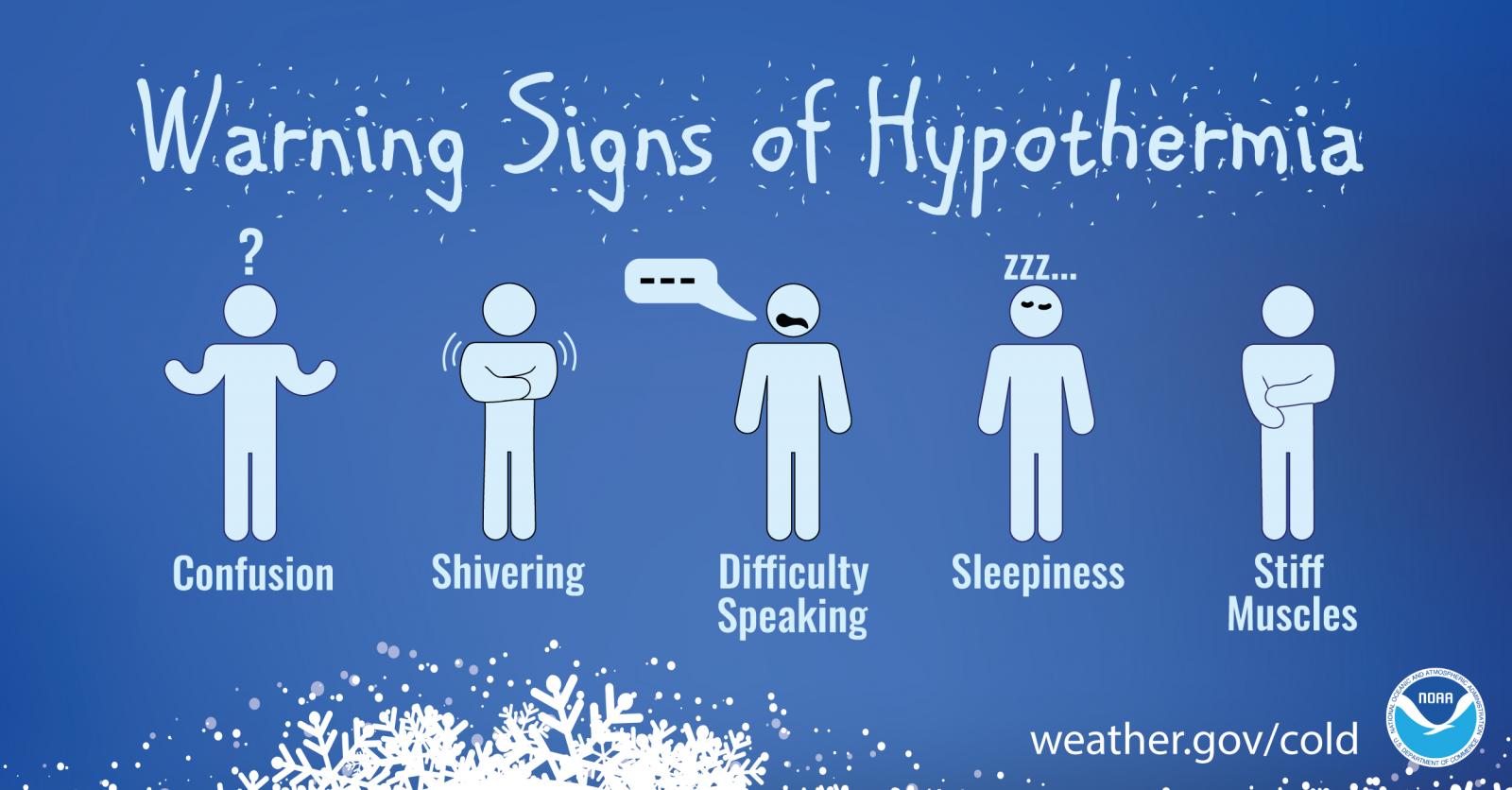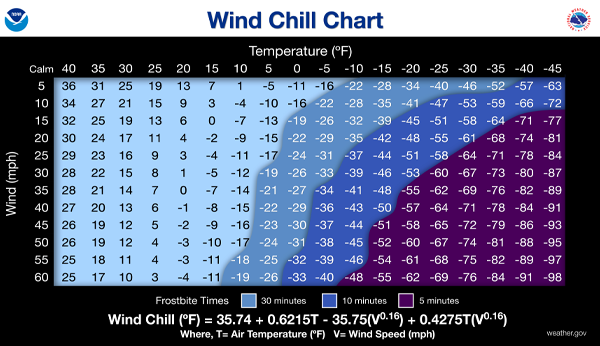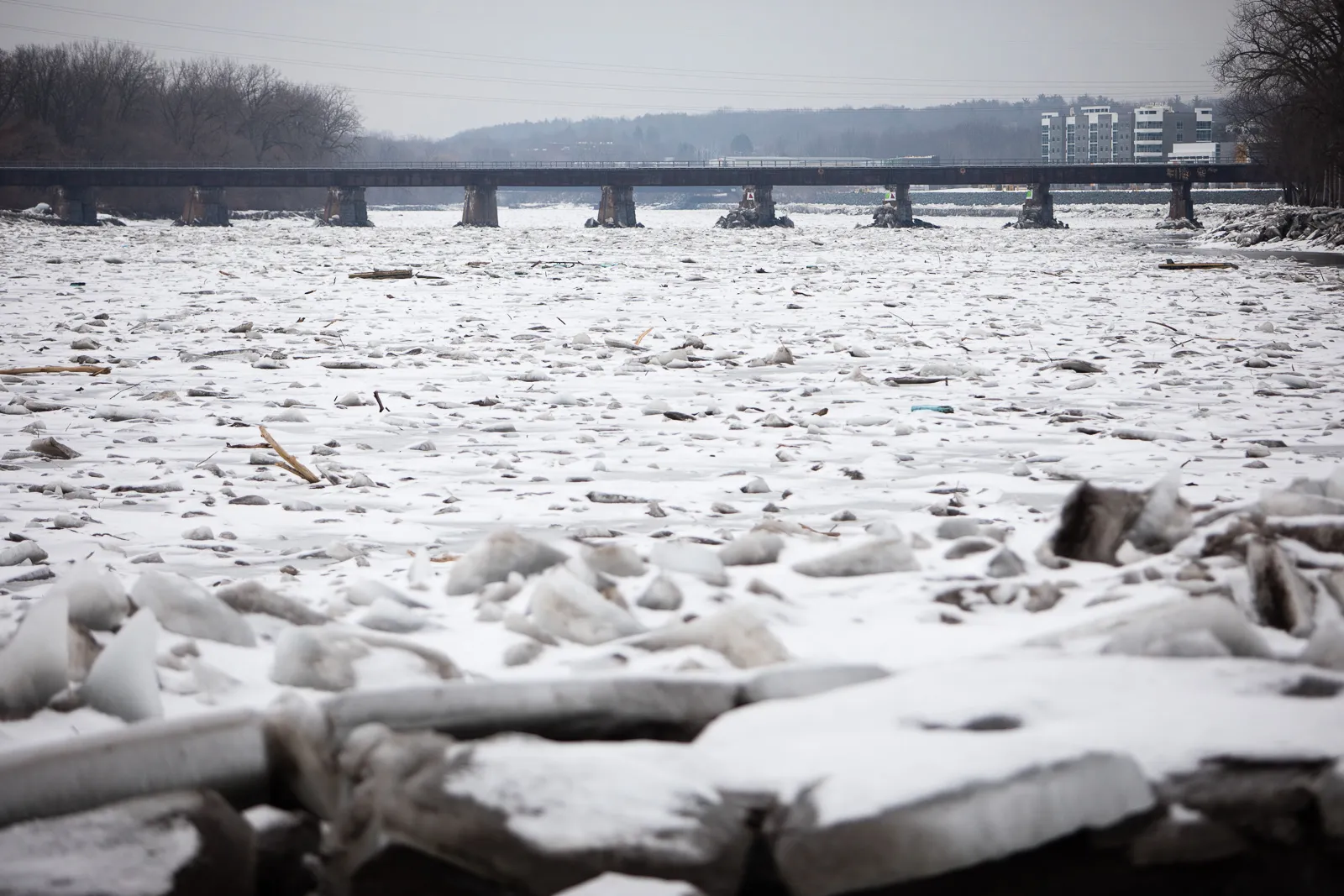
With extreme cold moving into the area this weekend, with feel like temperatures -30 to -40 below zero. We suggest minimizing your travel. Stay indoors during the worst part of the extreme cold, dress in warm layers, cover exposed skin (especially extremities), stay dry, limit time outdoors, take breaks in warm shelters, and avoid overexertion to prevent frostbite and hypothermia, keep a winter survival kit in your vehicle, if you must travel, check your tire pressures, antifreeze levels and make sure your heater / defroster is working properly. Learn how to shut off water valves for potential pipe bursts. Check on the elderly and make sure your pets are inside. If you exhibit symptoms like shivering, numbness, confusion, or pale skin, seek warmth or medical attention immediately.
Dressing for the Cold
- Layer Up: Wear loose, lightweight layers; wool, fleece, or polypropylene are good inner/insulating materials.
- Stay Dry: Change wet clothing immediately as moisture rapidly removes body heat and can cause hypothermia and frostbite.
- Protect Extremities: Mittens are warmer than gloves; cover your head, face, and mouth (use a scarf). Covering your mouth will help protect your lungs, especially if you have any breathing ailments.
Staying Safe Outdoors
- Limit Exposure: Stay indoors as much as possible and take frequent breaks in warm shelters.
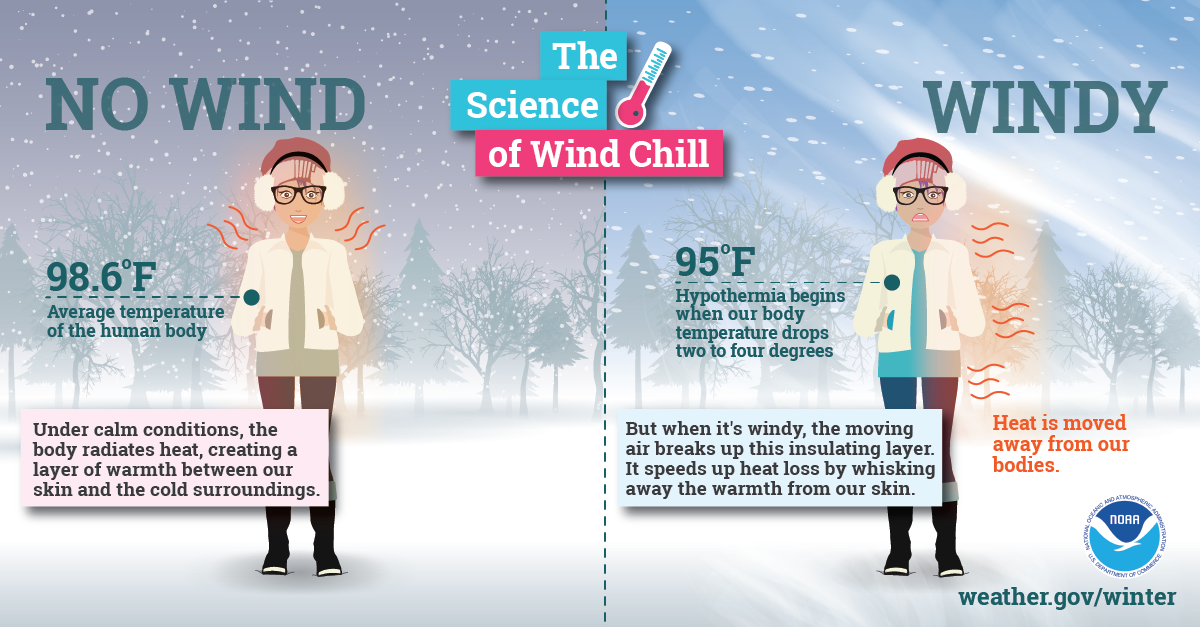
- Be Aware of Wind Chill: Wind can make it feel much colder and increase risk. If it all possible try and stay out of the wind.
- Avoid Strain: Don’t overexert yourself with activities like heavy snow shoveling, which can cause heart attacks or lead to sweating.
- Stay Hydrated: Drink warm fluids like broth or tea and try avoiding alcohol.
Recognizing Cold-Related Illnesses
- Frostbite: Affects exposed skin (nose, ears, fingers, toes); watch for numbness, waxy/discolored skin, or tingling. Get warm immediately and if you do see any discoloration of your skin, seek medical attention immediately.
- Hypothermia: Core body temperature drops; early signs are uncontrollable shivering, confusion, and extreme tiredness. Shivering stops as it worsens, skin turns pale/blue, and consciousness can be lost. Call 911 if it is severe.
At Home & In Your Vehicle
- Vehicle Kit: Keep a winter survival kit in your car with essentials and keep your gas tank full.
- Generator Safety: Use generators outdoors, far from doors and windows, to prevent carbon monoxide (CO) poisoning.
- Protect Pipes: Insulate exposed pipes and know how to shut off water to prevent bursts. If you must let the water trickle, to prevent your pipes from freezing and rupturing.
Community Safety
- Check on Others: Help the elderly, children, and those with chronic conditions.
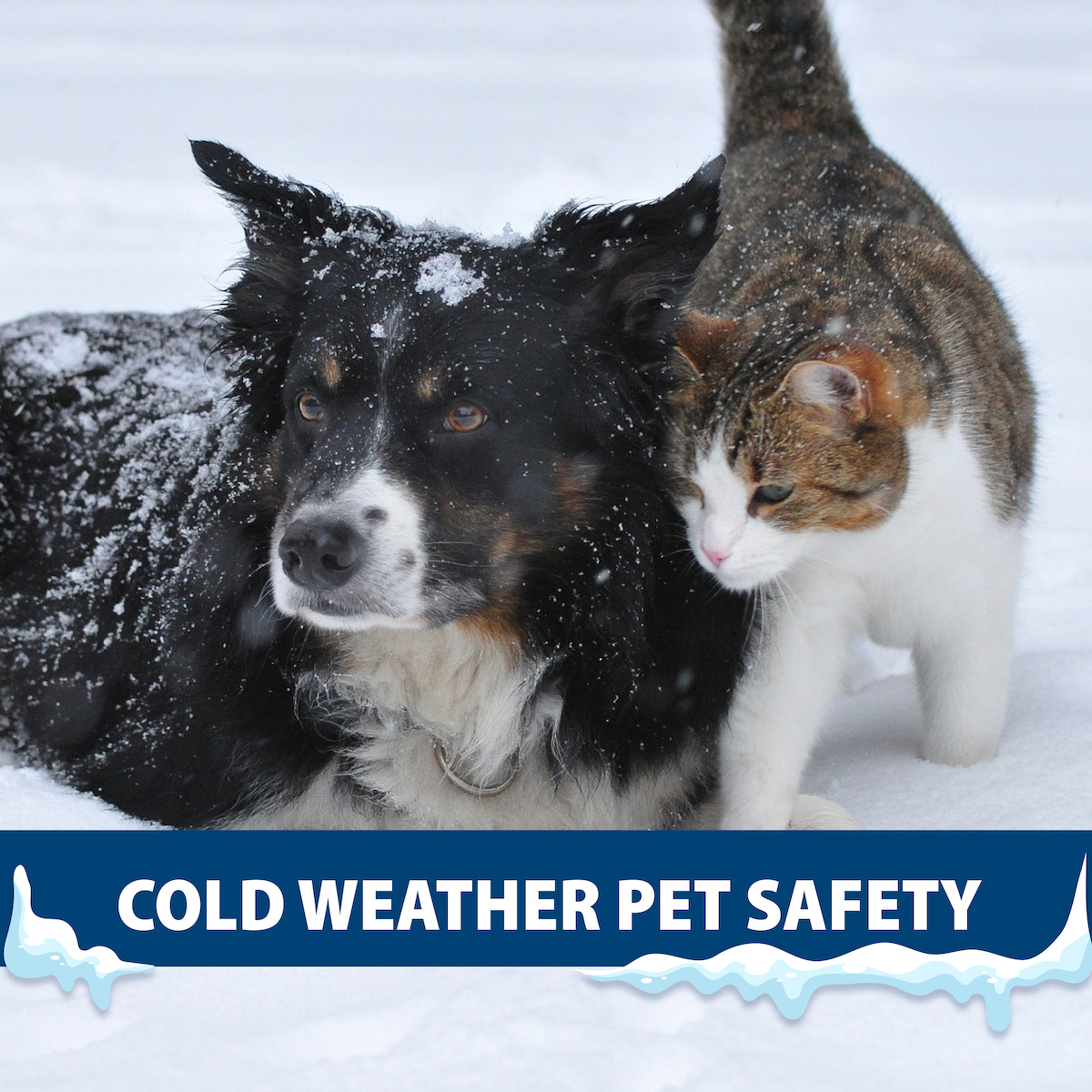
- Bring Pets Inside: Keep pets indoors to protect them from the extreme cold.